Archive of news
July 2019
Molecular orbital of the month This is a MO from SnOTf4. OTf is a triflate anion [SO3CF3]− which coordinates to the central tin (Sn) metal through oxygen atoms. SnOTf4 is a novel catalyst for activating methane and thus producing useful molecules like methanol. Using methane from biomass or natural gas sources as a feedstock to build more compelex molecules is a promising area. We also have the advantage of replacing transition metals with less expensive and more abundant main group metals. This new catalyst is unusual in that the ligand has a larger effect on reactivity than the central metal.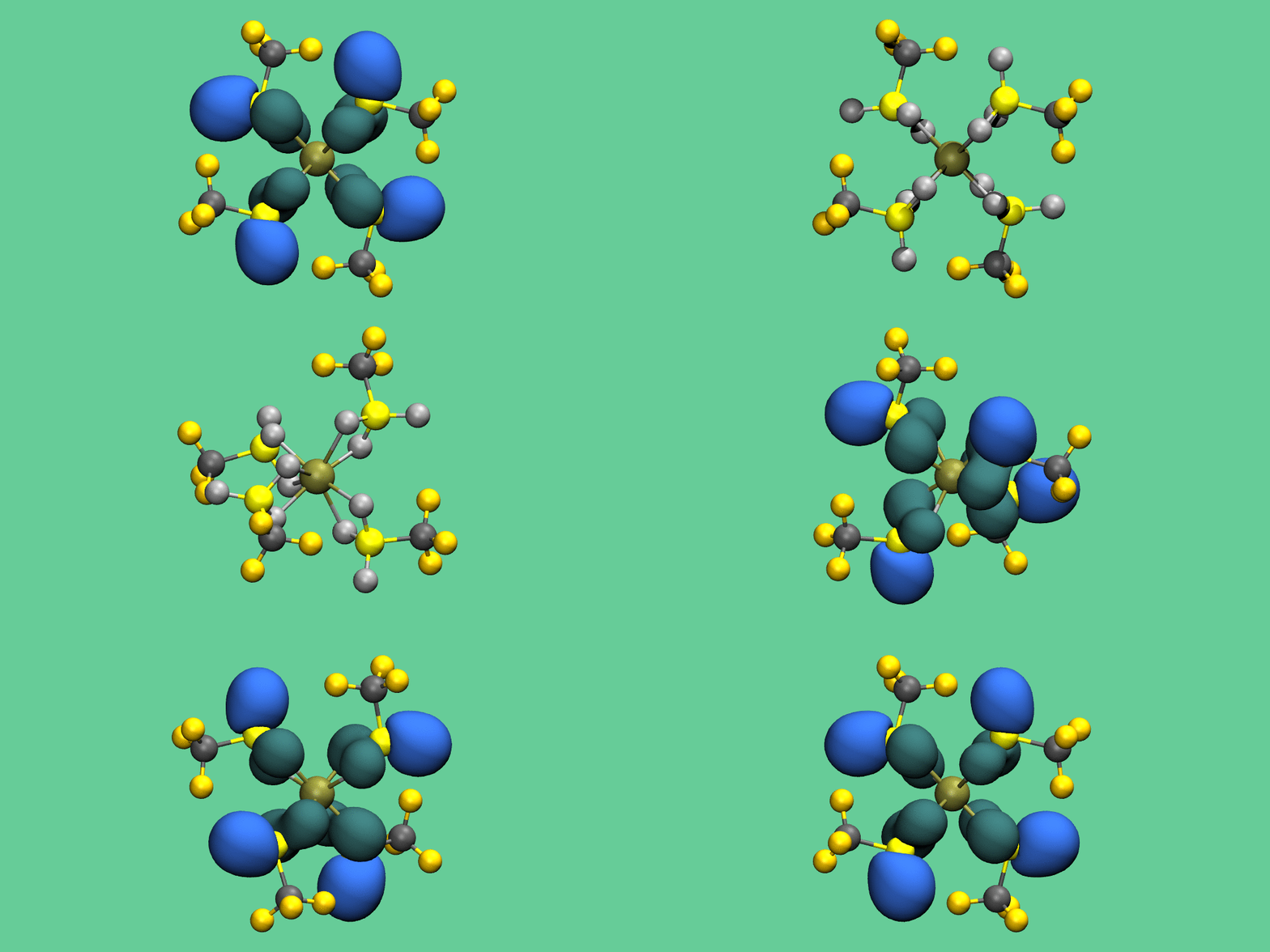
July 2019
Latest News Talks, Visits, Fun and Student EngagementTalking with BP
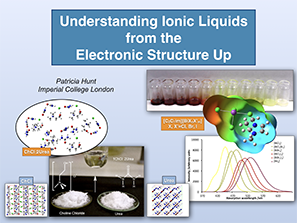
This month Tricia gave a talk at the BP International Centre for Business & Technology (ICBT) in Sunbury, UK. The talk covered two topics in ionic liquids, IL "super solvents" with complex hydrogen bonding patterns, and deep eutectic IL solvents with halometallate anions.
Group Outing
There is also time to socialise as a group, part of the group after an afternoon of mini-golf and evening dinner.


Now recruiting
The IMSE is now recruiting for the Oct 2019 intake for the MRes in Molecular Science and Engineering

Visiting Airbus
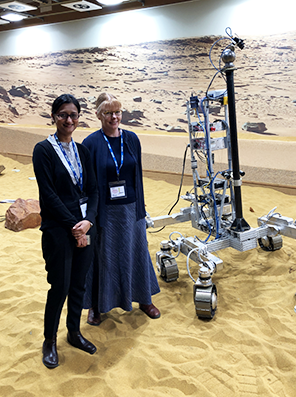
We are carrying out research on green fuels in collaboration with Airbus Space and Defence. Recently Soniya and Tricia visited the Airbus Stevenage site; we saw clean rooms where satellites are being made, walked in a very realistic Martian terrain test area and had a close encounter with the ExoMars rover!
Student Shapers
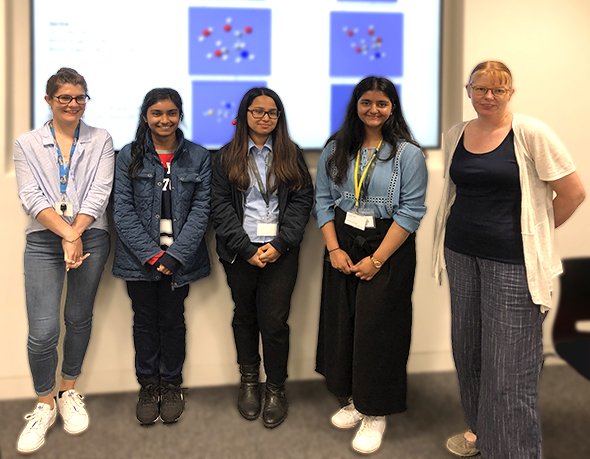
Tricia in collaboration with Euan Doidge a chemistry department teaching fellow have been awarded a 7.5k Student Shapers award to undertake a web-based project helping students to understand computational chemistry and bringing molecular orbitals to life. The project is part of Imperial's programme to support students as partners in Learning and Teaching. Welcome to Hari and Ethan who will be the summer students shaping this project!
March 2019
Molecular orbital of the month When Bismuth Trichloride BiCl3 is added to a Cl− based ionic liquid, it doesn't remain as BiCl3 but combines with Cl− to form new molecular anions. These new anions interact differently with the IL cation resulting in changes to the physical properties of the liquid. This is a MO from [Bi3Cl10]−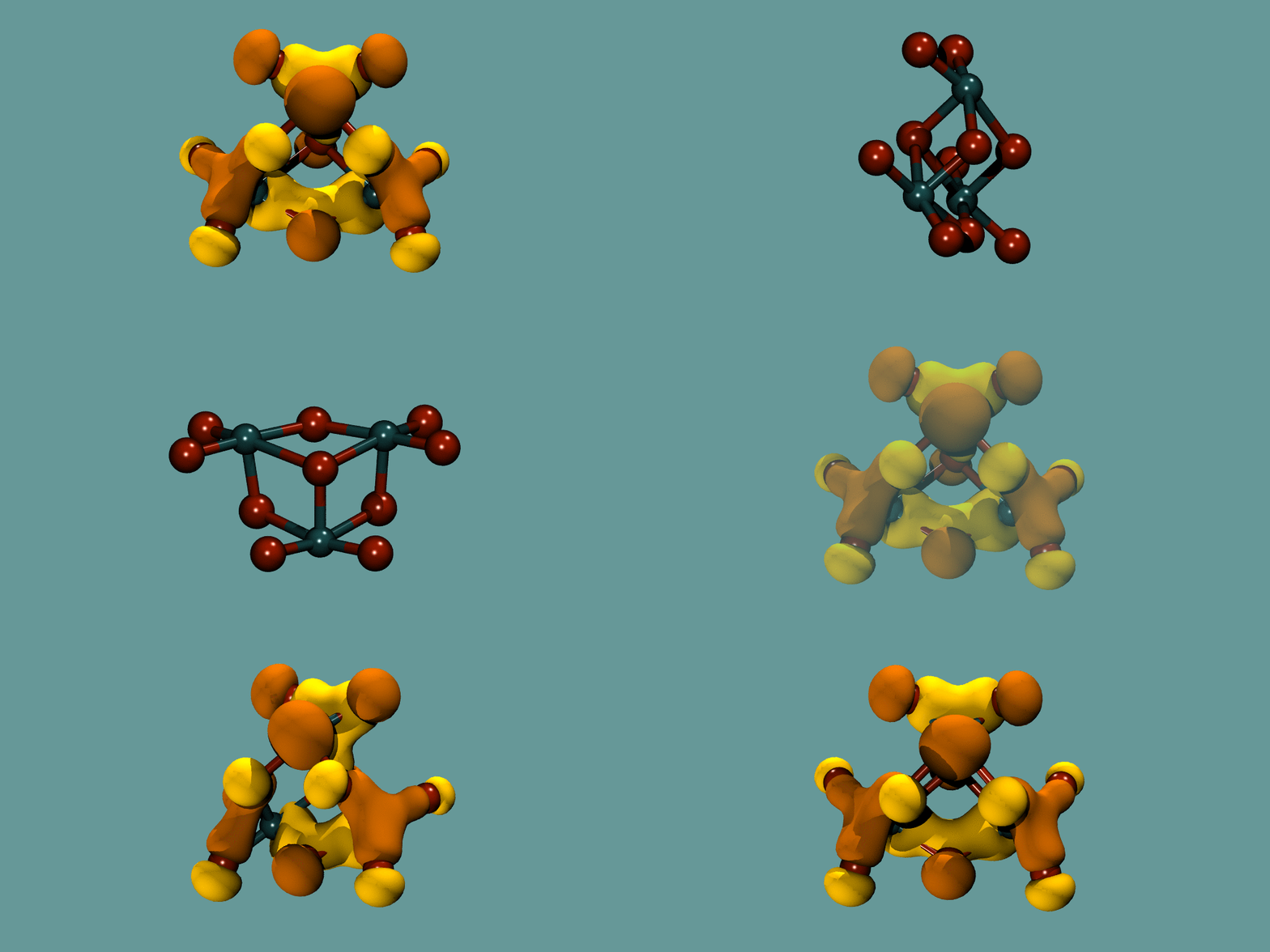
March 2019
Latest News Conferences, Book chapters and new group membersPlenary Speaker
Tricia will be speaking at COIL-8 in Beijing China in May this year.

A big welcome to
 |
Xhe Xu (BSc project) Cyril is undertaking a project using quantum chemical methods to investigate bonding in frustrated Lewis acid-base pairs. |
 |
Daniele (MRes IMSE) is undertaking a project on the solvation and transport of ZnCl2 in deep eutectic solvents, in association with researchers at Daresbury-STFC |
Now recruiting
The IMSE is now recruiting for the Oct 2019 intake for the MRes in Molecular Science and Engineering
Book Chapter
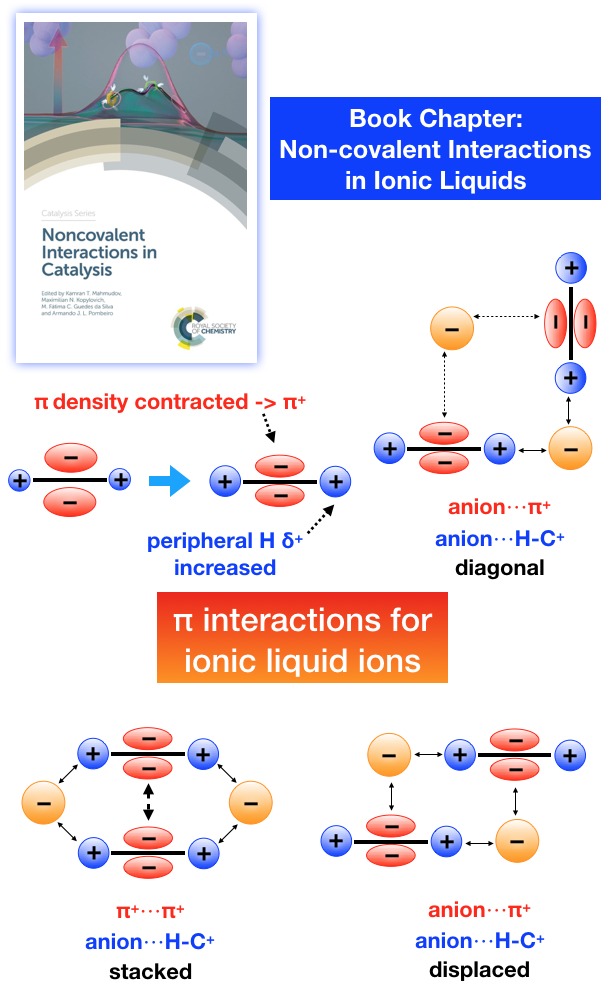
Tricia has a chapter titled Non-covalent interactions in Ionic Liquids available online now, in the soon to be published RSC book Noncovalent Interactions in Catalysis
Jan 2019
Molecular orbital of the month At the end of the term we looked at the MOs of the model complex Mo(CO)(PH3)H2 in my "MOs in Inorganic Chemistry" class.
Jan 2019
Latest News Conferences and new group membersPlenary Speaker
Tricia will be speaking at COIL-8 in Beijing China in May this year.
Tricia also spoke at the "International Symposium on Sustainable Molten Salt and Ionic Liquid Processing" in Brazil

New group members
A big welcome to
Julian (PhD),
Nerissa (MRes Catalysis),
Zili (MRes Chemical Biology),
Yuwei (MRes Green Chemistry),
Liquan (MRes Nanomaterials)