
Past Group Members
Dr. Ling Ge
Research Associate 2009-2013 Ling (from China) developed new theoretical tools for understanding condensed phase electronic states and applying these to aqueous solutions and ionic liquids. The vision of this project is to address a fundamental issue: how does the electronic structure of molecules alter on solvation? Ling has just completed her doctorate at Materials Modelling Laboratory (MML) and Quantum Information Processing IRC, Department of Materials, Oxford University. She has been working on modelling carbon nanomaterials - carbon nanotubes and fullerenes - for quantum computing.
Dr. Ioannis Skarmoutsos
Research Associate 2009-2011 Yannis (from Greece) is working on the molecular dynamics simulation of pure ionic liquids and ionic liquid mixtures, in order to reveal information about the local structural heterogeneities and the effect of intermolecular interactions on the structural and dynamic properties of ionic liquids. He is using classical molecular dynamics simulation techniques. Yannis obtained his PhD from the Physical Chemistry Laboratory, Department of Chemistry, National and Kapodistrian University of Athens (Greece) and after that I worked as a post-doctoral researcher in the department of Physics and Nuclear Engineering of the Technical University of Catalonia in Barcelona, Spain.
Heiko Niedermeyer
PhD student 2008-2011 Heiko (from Germany) is working on a BASF funded project on mixtures of ionic liquids and their physical and chemical properties. His research is focused on the solvent characteristics of these mixtures, as measured by Kamlet-Taft parameters and NMR, as well as on the possibility of influencing their physical properties like melting points and viscosities. He is using computational methods as well as experimental techniques. More information can be found on the research tab, under Ionic Liquids
Weihong Teo
MRes Nanomaterials student 2010-11Weihong looked at phosphonium functionalised ILs for technological applications. One of the factors limiting the use of ionic liquids is the lack of knowledge in correlating the fundamental and molecular properties to macroscopic properties. In this project Weihong surveyed the effect of functionalising the alkyl side chains on the electronic structure of phosphonium IL cations.
Yang Li
MRes Green Chemistry student 2010-11Yang investigated the dicyanamide (DCA) anion in the BmimDCA IL. DCA based ILs have a low viscosity and are one of the ILs most used for electrochemcial applications.
Joe Greener
Summer project student 2010-11Jow investigated how ILs interact with Reichardt's dye. Solvatochromic probes are dye molecules that exhibit a shift in their UV-vis peak maxima on solvaton, the amount of the shift depends on the properties of the solvent. Reichardt's dye is used to measure the H-bonding ability of solvents in general, and also of ILs. This project used ab-initio quantum chemical methods to investigate the interaction of Mmim based ILs with Reichardt's dye. The secondary effect of the anion on the interaction was also examined.
Wendy Chuan-Wen Kuo
MRes Nanomaterials student 2010-11Wendy (from Taiwan) is currently working with imidazolium-based ionic liquids, exploring their potential applications towards batteries and capacitors. Ab initio molecular dynamics simulations are used to analyse the structural and electronic properties of ionic liquids by looking at how the solvation dynamics, electronic structure, molecular orbitals and Wannier orbitals change according to temperature changes and small amounts of water contamination. The effects of varying temperature and salt concentration on conductivity are also measured experimentally.
Rachael Bartholomew
MSci 4th-year project student 2010-11Phosponium ionic liquids
Muhiba Sheikh Adam
BSc project student 2010-11Lanthanide catalysis
Pan Pan Xue
BSc project student 2010-11Serene Weiyan Chen
Summer project student 2009-10Ammonium and heavier group 15 analogues as ionic liquids
Fiona KaWing Li
Summer project student 2009-10Water contamination in ionic liquids
Flo Slater
MSci 4th-year project student 2009-10 and summer student Flo (from UK) is continuing work on the group II metal-catalysed hydroamination of alkenes. She is investigating the catalytic cycle at a new, higher level of theory to provide a better, more accurate description of the steps involved. Altering the metal ion, substrate and ligand structures will determine how and why each can influence the system and with the most efficient combinations established, suggestions can be made to improve the process experimentally. More information can be found on the research tab, under Group2 Catalysis.
Seham Akkad
BSc project student 2009-10 Seham (from UK) is looking into the energetics of different conformers of the Methyl DBU cation as well as the energies gained from ion pair interactions of this cation with different anions such as Cl-, TFSI- and TF-. She is also investigating other organic cations. Quantum chemical calculations are used to investigate the geometric and electronic structure in order to better understand the unusual reactivity and properties of ionic liquids. More information can be found on the research tab, under Ionic Liquids
Zeya Rao
Summer project, 2008-09 Zeya (from China) is investigating the molecular level contributions to the high viscosity of ionic liquids (e.g. the effects of changing alkyl chain lengths on NR4+ and PR4+). The aim is to understand ionic liquids at a fundamental level, and to employ the new knowledge in designing new low viscosity ionic liquids for use in electrochemical devices. More information can be found on the research tab, under Ionic Liquids
Simon Kilroy
Summer project, 2008-09 Simon (from UK) is investigating the effects of functionalising 1,3-dialkyl imidazole cations, which are found in many ionic liquids. Looking specifically at primary amine containing boronium ions, and also organosilanes, the changes in the electronic structure are quantified as well as certain physical properties such as barriers of rotation. This will help to explain why certain ionic liquids can be applied to specific tasks/areas of industry, and also how their structure - both physical and electronic - relates to this application. Boron containing cations have been investigated for producing ionic liquids for use with nuclear waste, as they greatly increase the critical mass of radioactive isotopes which can be stored in the solution in comparison to other common fluids such as water. More information can be found on the research tab, under Ionic Liquids
Hieu Nguyen
MSci, 2008-09 Hieu (from Vietnam) is a final year student doing a 4-year MSci in Chemistry at Imperial. His project is to investigate the possible mechanisms for the ring opening polymerisation of lactide initiated by Yttrium complexes. Polylactide (PLA) is a biodegradable material with huge potential as a replacement for petroleum-based polymers. The project is solely computational and running in parallel with synthetic work by Ross Portman, a PhD student. The project's aim is to compute a full catalytic cycle for the first addition of lactide to the Yttrium initiator. More information can be found on the research tab, under Ionic Liquids
Mark Sheppard
MSci, 2009-10Mark (from England) is a final year student doing a 4-year MSci in Chemistry at Imperial. His project is to investigate phosphonium based ionic liquids and to understand how they differ from ammonium based ionic liquids. More information can be found on the research tab, under Ionic Liquids
Rosalind Portman
PhD 2008-09 Ros (from UK) worked on the ring-opening polymerization of lactide to produce the biorenewable polymer polylactic acid, using yttrium complexes as catalysts. She looked at the mechanistic details of the catalytic cycle using computational methods, in combination with experimental studies (as part of the Williams Group) into the structures and activities of these complexes.
Benny Chew
MRes Green Chemistry 2007-08 Benny has been extending the work on alkyl chain functionalisation of ionic liquids, looking at the effect of adding a hydroxy group, he has also been using a triflate anion rather than our usual Cl anion. More information can be found on the research tab, under Ionic Liquids
Krishna Hassomal
MSci, 2007-08 Krishna has been looking at the effects of functionalising the ionic liquid cation, specifically on chemical changes that will change the electronic structure of the system. She has also looked at functionalising the alkyl chain in various ways. More information can be found on the research tab, under Ionic Liquids
Tom Grime
MSci, 2007-08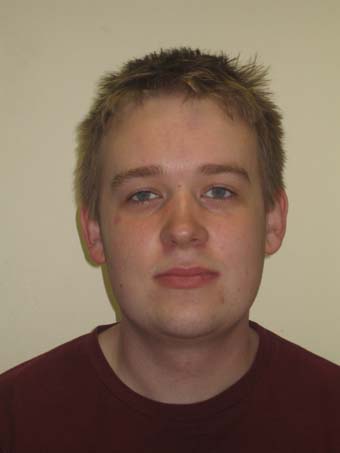 Tom took the project Andy started one step further in more than one direction, the first part of his project involved improving the ligand description upto and including the "real" ligand, he has also investigating hydrophosphination as opposed to hydroamination at a group II catalyst, and he has investigated intermolecular hydrophosphination vs intramolecular hydrophosphination.
Puja Shah
Summer project, 2007-08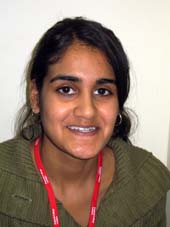 Puja is an undergraduate at UCL who is learning about (and doing) some computational chemistry. Puja is studying the ionic liquid bmpyCl which is composed of bmpy cations and Cl anions. The first part of her project has been to determine the different stable configurations of an ion pair. Then she has examined the electronic structure of the ion pair by looking at the electrostatic potential, charges on atoms and molecular orbitials. More information on ionic liquids can be found on the research tab, under Ionic Liquids
Sheena Shah
Summer project, 2007-08Yifeng Wei
Summer project, 2007-08Till Froemling
German project, winter of 2007-08 Till was an Erasmus student from Philipps-Universität, Marburg, in Germany.
He worked on characterising the coordinating ability of ionic liquid solutions using Nickel based dyes, he made and used new Ni based fluorescence probes, and studied a larger range of such complexes using computational methods. More information on ionic liquids can be found on the research tab, Ionic Liquids
Till was an Erasmus student from Philipps-Universität, Marburg, in Germany.
He worked on characterising the coordinating ability of ionic liquid solutions using Nickel based dyes, he made and used new Ni based fluorescence probes, and studied a larger range of such complexes using computational methods. More information on ionic liquids can be found on the research tab, Ionic Liquids
Andy Sykes
MSci, 2006-07 Andy was a home grown student, he worked on a catalysis project, the hydroanimation of olefins to produce aminoalkanes using Ca compounds as catalysts. Andy provided an in depth understanding of the mechanistic details in this pathway. More information can be found on the research tab, under Group2 Catalysis.
Juri Ugolotti
PhD, 2005-06 Juri is an Itallian PhD student primarily working on the synthesis of boron based compounds that contain both Brönstead and Lewis acidic sites. He is also very keen on computational chemistry and has been hard at work characterising his compounds, boron based acids, using computational tools, as well as studying the ring forming mechanism of a very unusal heterocyclic ring system which contains B, C and O atoms.
Giovanni D'Andola
PhD, 2004-05 Gianni worked on ionic liquids, and has gone to BASF